If you’re running a Shopify store, you already know how time-consuming pricing can be. Promotions, stock changes, seasonal surges, supplier cost fluctuations—everything requires manual updates. And the more products you have, the more chaotic pricing becomes.
But what if pricing no longer needed your daily attention?
What if the system could automatically adjust prices for you—accurately, instantly, and intelligently?
That’s exactly what Shopify dynamic product pricing delivers. It replaces constant manual edits with automated, rule-based adjustments that keep your prices competitive and your margins protected. It’s like having a built-in pricing manager working around the clock.
For many store owners, manual pricing feels like a never-ending chore. You update one set of products, only to find three more categories that need attention. The risks add up quickly:
Human errors that lead to overpricing or underpricing
Slow reaction time when demand changes
Inconsistent pricing across collections
Missed opportunities during sales or stock fluctuations
Hours wasted on repetitive changes
Dynamic pricing eliminates these problems by automating the entire process.
Dynamic pricing tools on Shopify let you set rules—then the system automatically updates prices depending on real-time conditions. Here’s how it simplifies your workflow.
Running a holiday promotion? Want a weekend flash sale?
Instead of manually changing hundreds of prices, dynamic pricing applies discounts automatically based on:
Time and dates
Product collections
Customer groups
Once the promotion ends, prices revert to normal—no cleanup required.
Let your pricing respond to stock levels:
When inventory is high → auto-discount to increase sales
When stock is low → auto-increase to protect margins
When overstocking occurs → auto-clearance pricing
No more guessing or scrambling to adjust prices.
If a product suddenly surges in demand, dynamic pricing helps you capitalize. Prices can adjust slightly to reflect popularity while still staying fair to customers.
It’s the eCommerce version of “smart supply and demand.”
Costs change—but your profit shouldn’t.
Set minimum profit thresholds so the system never prices below your required margin. Even during sales, your bottom line stays protected.
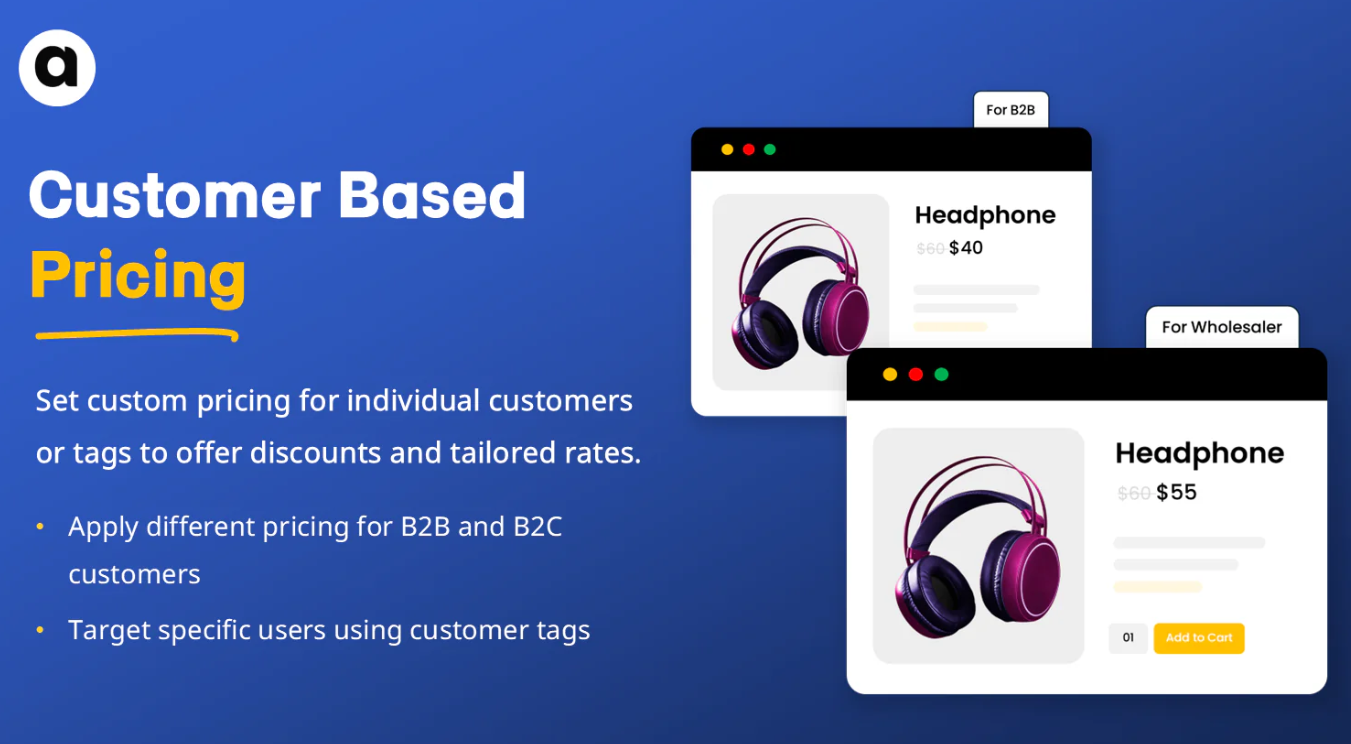
Reward VIPs, wholesale buyers, or loyal customers without constantly creating coupon codes. Dynamic pricing automatically applies discounts only to the segments you choose.
A beauty store sets automatic weekend discounts—no manual scheduling needed.
A sporting goods brand increases prices by 5% when stock drops below 10 units.
A furniture shop sets clearance rules that drop prices by 20% on items older than 90 days.
A bakery supply store uses volume-based pricing to auto-adjust bulk discounts for B2B buyers.
Every one of these adjustments runs without human intervention.
Shopify tiered pricing frees you from the repetitive, error-prone task of manual pricing. With smart automation, your store reacts instantly to demand, inventory, customer behavior, and seasonal changes—ensuring you always sell at the right price.
Say goodbye to constant updates.
Say hello to pricing that manages itself.

